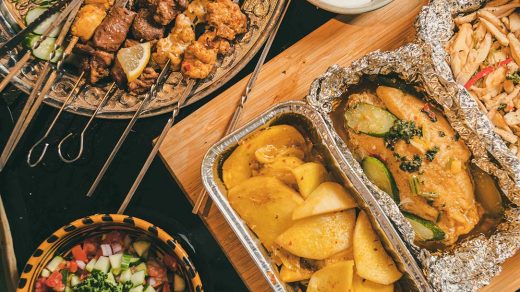
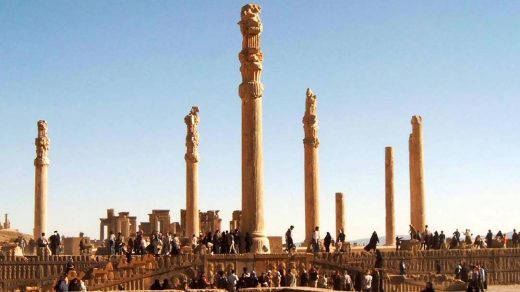
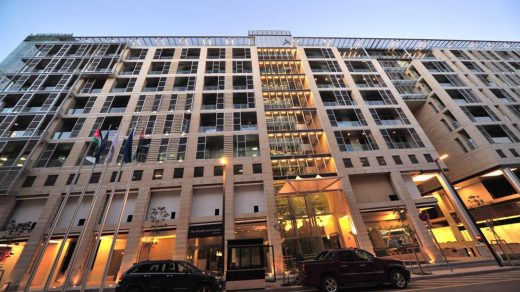
Petra is not merely a feast for the eyes; it is also a journey for the palate. The local cuisine—a fusion of Jordanian tradition, Bedouin hospitality, and the distinct flavors of the desert—allows travelers to experience the culture on a deeper, more visceral level.
Traditional Jordanian Breakfast: A Symphony of Flavors and Morning Light
Early in the morning, I began my day’s adventure at The Cave Bar & Restaurant, located near the Petra Visitor Center. The table before me was laden with a colorful array of delicacies: golden, crispy flatbreads, fresh from the oven and exuding the aroma of wheat; glistening slices of fresh olives and tomatoes; and crisp, refreshing cucumber. A bowl of thick, creamy yogurt (Labneh) sat nearby—smooth, rich, and drizzled with olive oil and a sprinkle of Za’atar spice. The herbaceous notes blended perfectly with the savory tang of the yogurt, offering a burst of fresh flavor with every bite.
I picked up a piece of flatbread, dipped it generously into the Labneh, and took a gentle bite; the creamy richness of the yogurt and the smooth olive oil slowly melded in my mouth, creating a texture that was both rich and layered. Each dish possessed its own unique character, yet together on the same table, they formed a harmonious ensemble.
I paired my meal with a cup of Jordanian tea—a brew of brilliant ruby-red hue, faintly sweet, and emitting a subtle floral and herbal fragrance. As I took a slow sip, a wave of warmth spread from my mouth throughout my entire body. Sunlight filtered through the narrow crevices of the canyon, casting golden beams onto the red rock walls; these golden rays spilled onto my table, illuminating the vibrant colors of my breakfast. As I savored my meal, I gazed toward the distant entrance of the canyon, feeling a gentle breeze brush against my face—a breeze carrying the dry air of the desert and the warmth radiating from the ancient rocks.
In this moment, time seemed to slow down. The tranquility of the early morning, the warmth of the sunlight, the fragrant aromas of the food, and the unique red rock walls of Petra all wove together to create a scene of profound warmth and serenity. I felt deeply that Petra is not merely an ancient historical city, but an experience of a way of life—where every bite of breakfast serves as an intimate greeting to the city itself.
A Bedouin-Flavored Lunch: Mansaf and the Taste of the Desert
For lunch, I chose Al-Wadi Restaurant, located in the small town of Petra, to experience an authentic Bedouin-style meal served in a desert tent. The restaurant’s interior was decorated with rustic simplicity; sand-colored tents, hand-woven carpets, and soft lighting created a deeply immersive desert atmosphere. Gentle Arabic music drifted through the air, seemingly transporting me back to the era of ancient Bedouin tribes.
Center stage on the table sat the star of the day: Mansaf—Jordan’s national dish. On a large platter, tender lamb lay atop golden, aromatic rice, drenched in a rich fermented yogurt sauce and garnished with toasted pine nuts and spices. The waiter smiled and gestured for me to eat with my hands—the most traditional method, and the best way to truly savor the ingredients in their purest form.
I carefully pinched a small piece of lamb, dipped it into the yogurt sauce, and brought it to my mouth. The lamb was tender and succulent; the mild tang of the yogurt sauce blended with the fragrance of the rice, and—complemented by the crunch of the pine nuts—each bite exploded with layers of rich flavor. Every mouthful seemed to tell a story of the Nabataean civilization—a tale of this land, this ancient city, and the culture and flavors that have been distilled over millennia into a single meal.
Glancing around, I saw other diners in the tent also immersed in this tranquility and aroma. Sunlight from the desert outside filtered through the seams of the tent, casting dappled patterns of light and shadow across the tables, making it feel as though the entire lunch was being gently embraced by the red rock cliffs of Petra. Sitting there, I was not merely enjoying a meal; I was embarking on a culinary journey through history and culture.
Roadside Bites and Street Snacks: The Casual Flavors of Petra
While hiking through the ruins of Petra, I was drawn in by the enticing aromas wafting from the roadside stalls along the path, prompting me to stop and sample some local street snacks. The handmade Ka’ak (sesame bread rings) had just come out of the oven; slightly crisp on the outside and soft within, they filled my mouth with the rich fragrance of sesame—each bite carrying the warm, comforting scent of fresh baking. Next, I sampled some roasted almonds; the subtle hint of salt blended harmoniously with the nuts’ natural aroma, and as I chewed, I could almost taste the unique dryness of the desert air—an experience that made me instinctively slow my pace.

Along the way, locals were grilling spiced lamb skewers right on the spot. The charcoal embers glowed softly, and the scent of spices drifted on the breeze, filling the air with an alluring smoky fragrance. I couldn’t resist stopping to pick up a piping-hot skewer of lamb. With a gentle bite, the juices and spices burst onto my tongue, as if the entire red-rock canyon had been illuminated by this exquisite aroma. Though simple, these roadside snacks distilled the local character, the desert spirit, and the very essence of Nabataean life into a single, unforgettable moment—leaving me lingering, reluctant to move on.
Dinner at a Signature Restaurant: A Perfect Culinary Finale in Petra
As evening fell, I stepped into Petra Kitchen—a restaurant that marries modern culinary techniques with traditional Jordanian flavors. Seated in the open-air dining area, I watched as the surrounding red rock cliffs glowed with a golden radiance under the setting sun, while a gentle breeze swept through, carrying the distinctive dry scent of the desert.
Among the restaurant’s recommended dishes, the roasted chicken served with spiced rice stood out: its skin was delightfully crisp, its meat tender and juicy, and every bite exuded the captivating fragrance of Middle Eastern spices. The spicy vegetable stew—a medley of eggplant, carrots, and tomatoes—offered a delightful balance of tanginess and heat, with rich, layered flavors that truly whetted the appetite.
For dessert, I ordered Baklava (walnut phyllo pastry) and Künefe (a cheese-based sweet). The Baklava was crisp on the outside and soft within, with the walnuts and syrup blending in perfect harmony—sweet, yet never cloying. The Künefe arrived piping hot, the strands of cheese stretching enticingly as I lifted my fork, releasing a mouthwatering aroma. Paired with a cup of rich, slightly bitter Arabic coffee—infused with a distinct roasted fragrance—each sip felt like a distillation of the day’s journey; the sweetness and the bitter notes intertwined on my tongue, leaving a lingering, unforgettable aftertaste.
This meal was more than just a feast for the palate; through the interplay of light and shadow, aroma, and fresh ingredients, it seamlessly blended the sunset hues and cultural atmosphere of Petra, bringing a warm and romantic conclusion to a day of travel.
Dessert and Coffee: The Perfect Finale
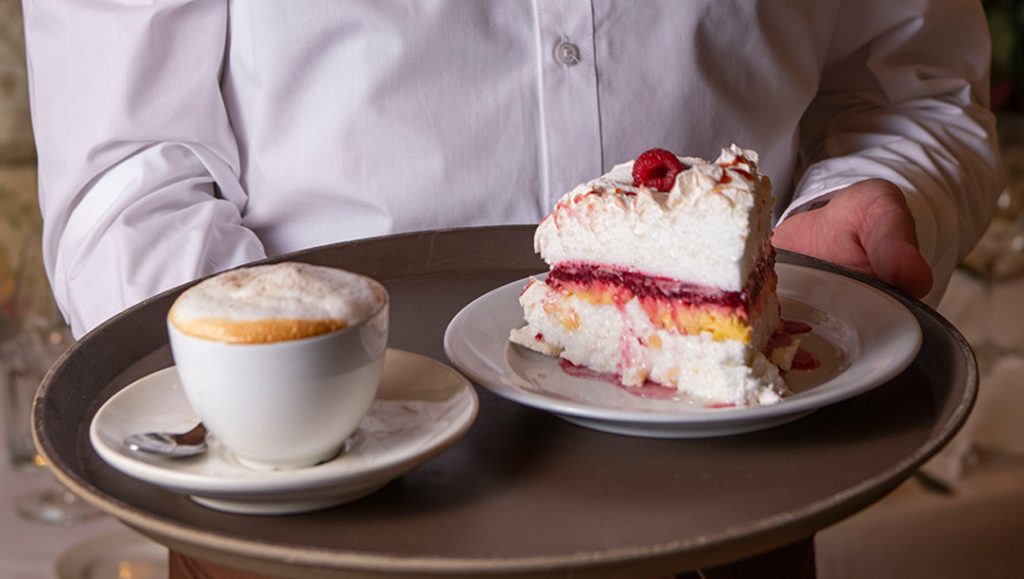
No journey through Petra is truly complete without concluding the day with dessert and coffee. I found a quiet terrace at Al Qantarah Café, where I sat overlooking the red rock cliffs bathed in the glow of the night. The waiter served me a cup of traditional Turkish coffee—rich and slightly bitter, with aromatic afternotes of cinnamon and cardamom. Paired with the crisp, sweet fragrance of Baklava (walnut phyllo pastry), every bite was an exquisite indulgence for the palate.
I took a gentle sip of coffee, then a bite of the sweet, flaky pastry. A gentle breeze brushed against my face as the rock cliffs glowed with a soft red light in the darkness, the distant contours of the desert faintly visible on the horizon. I took a deep breath; the bitter aroma of the coffee and the sweetness of the Baklava mingled in my mouth, as if capturing and preserving both the day’s adventures and the mysterious aura of Petra. In this moment, both my palate and my soul found perfect fulfillment, bringing my journey through Petra to a warm and romantic close.
Travel Tips
Water and Beverages: Petra has a dry climate, so carrying water with you is essential; the mint lemonade served at local restaurants is incredibly refreshing.
Local Spices: Za’atar, dried fruits, and Turkish coffee make for excellent souvenirs.
Dining Experience: Opt for restaurants with outdoor terraces or views of the rock cliffs to enjoy Petra’s unique natural and architectural landscapes while you dine.
A Culinary Journey Through Petra: A Perfect Encounter of Taste and History
Petra is not merely a marvel of history and nature, but also a profound cultural and culinary experience. From a traditional breakfast at dawn to a Bedouin-style lunch, followed by street snacks, an elegant dinner, and finally, the perfect finale of dessert and coffee—every meal serves to forge a deep connection between the traveler and this ancient red city, allowing both the palate and the soul to embark on an unforgettable journey together.