Located in southern Jordan, Petra is one of the Seven Wonders of the World and a UNESCO World Cultural Heritage site. Hidden within a canyon of red sandstone, this ancient city—built by the Nabataeans—is renowned globally for its spectacular rock-cut architecture and enigmatic history. Stepping into Petra feels like entering an ancient kingdom forgotten by time.
1.The Siq: The Mysterious Gateway to the Ancient City
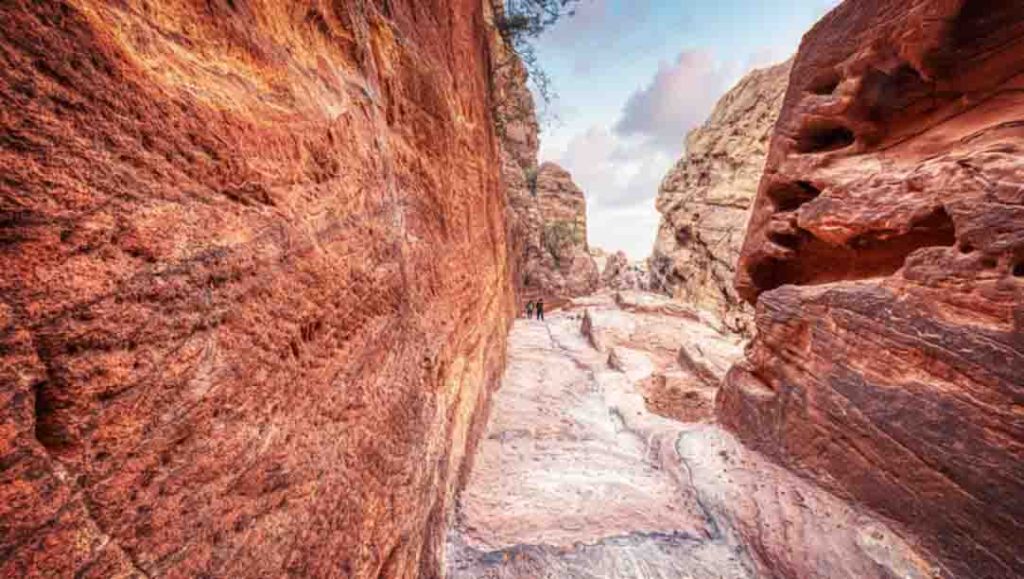
My journey through Petra began at the famous Siq (the Canyon). The early morning air carried the distinct dryness and cool crispness of the desert as I set foot upon this winding, rocky trail. Towering red rock walls rose skyward on both sides; under the morning light, the mottled textures of the rock surfaces appeared remarkably three-dimensional, creating what felt like a natural gallery of sculptures. At its narrowest point, the canyon is barely wide enough for a single person to pass sideways; looking up, the sky is reduced to a mere ribbon of light. Sunlight filters through the rock fissures, dappling the flagstones beneath my feet—a dance of light and shadow that seemed to sway gently with my every step, as if guiding me forward.
Along the way, I noticed faint traces of ancient water channels and carvings etched into the rock walls—vestiges of Nabataean ingenuity that compelled me to imagine how, thousands of years ago, caravans relied on these waterways to maintain their connection with the city. I reached out to gently touch the rock face, feeling the coolness of the stone and the palpable weight of the ages; with every step, it felt as though I were engaging in a dialogue with history itself. Occasionally, a breeze would sweep through, bringing with it the faint sound of shifting sand—as if the canyon itself were whispering, sharing the secrets of an ancient civilization.
After walking for about twenty minutes, the canyon suddenly opened up to reveal a breathtaking spectacle: the red rock façade of the Treasury (Al-Khazneh) shimmering with a golden-red luster in the sunlight—a true miracle carved directly from the living rock. I paused, took a deep breath, and felt my heartbeat and breathing quicken in unison; in that moment, the full mystery and magnificence of Petra washed over me.
2.The Treasury (Al-Khazneh): The Symbol of Petra
As I stepped out from the end of the Petra Siq, the sight before me instantly took my breath away—it was the Treasury (Al-Khazneh). Towering red rock walls served as a natural barrier, while the exquisitely carved façade showcased the perfect proportions and breathtaking details of classical architecture. Sunlight spilled across the rocks, causing the walls to glow with a golden-red luster, as if the entire structure were shimmering.
I walked slowly toward the Treasury; with every step, I could feel the faint crunch of gravel beneath my feet, and my heart quickened slightly in anticipation. Looking up, I marveled at the carved columns, bas-reliefs of goddesses, and intricate patterns—details so fine they seemed almost unbelievable, as if every inch of stone told a story of the Nabataeans. I couldn’t resist reaching out to touch the cool, hard rock face, feeling the weight of thousands of years of history embedded within it.
Tourists all around me paused to take photographs, but I found myself lingering longer, simply to gaze in silence at this legendary structure. As the filming location for numerous movies, the site exudes an air of mystery and legend, making me feel as though I stood at the very heart of an ancient civilization. The Treasury is not merely the symbol of Petra; it is a historical miracle spanning millennia—a sight that would remain etched in my memory for a long time to come.
3.The Ancient Roman Theater: A Historical Stage Carved into Stone
Following Petra’s winding main path, I made my way toward the Ancient Roman Theater, nestled amidst the red rock walls. As I approached, I was struck by its sheer scale and the craftsmanship of its carving: the theater was hewn directly into the solid rock, with tiers of stone seats rising gradually from the ground—a venue capable of accommodating thousands of spectators for performances and ceremonies.
I sat upon the cool, hard stone steps, closed my eyes, and imagined I could hear the cheers of ancient audiences and the footsteps of actors echoing between the rock walls. Sunlight streamed in from above at an angle, casting a dappled interplay of light and shadow across the stone, lending the entire theater an air of both solemnity and mystery. As my hand gently grazed the stone steps, I could feel the historical resonance of millennia past—as if I had forged a subtle, intangible connection with that ancient civilization.
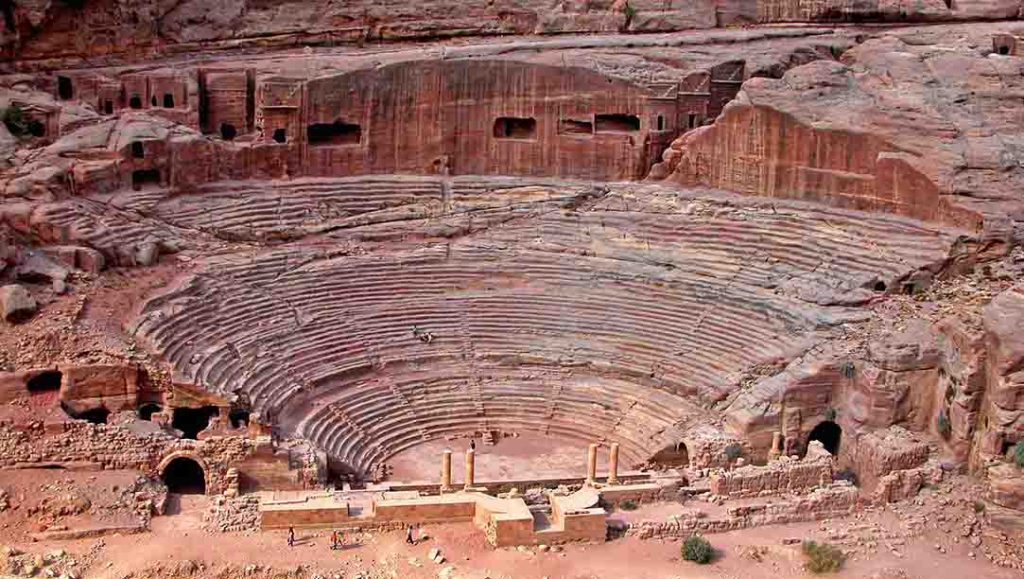
Standing here, I perceive not only Petra’s vibrancy as a trade hub but also sense the profound heritage rooted in its role as a crossroads of cultures. The theater is more than just a structure; it is a segment of history etched into the very rock—a sight that fills me with awe.
4.The Royal Tombs: Eternal Architecture on the Rock Face
Continuing along Petra’s main thoroughfare, I arrived at a cluster of Royal Tombs that left me breathless. Viewed from a distance, a majestic row of tombs carved directly into the towering red cliffs appeared like a series of palaces standing in silent repose. The façade of each tomb is exquisitely detailed; some are adorned with colonnades and arches, while others feature intricate floral motifs and geometric patterns, showcasing the Nabataeans’ astonishing architectural ingenuity.
I approached one of the tombs, reaching out to touch the rough, unyielding rock surface, feeling as though I could sense the labor and patience of the craftsmen who worked here thousands of years ago. Sunlight slanted through the crevices in the rock, casting dancing patterns of light and shadow across the carvings and infusing this ancient architecture with an atmosphere of mystery and solemnity. Standing before the tomb, I quietly immersed myself in the stillness; with only the sound of the wind and the occasional footsteps of distant travelers to be heard, time itself seemed to stand still.
These rows of Royal Tombs serve not only as a record of the Nabataean royalty’s glory but also allowed me to gain a profound appreciation for the grandeur and timelessness of the ancient city of Petra. They stand as witnesses to history—masterpieces of both human ingenuity and artistic expression.
5.The Monastery (Ad Deir): The Most Magnificent Highland Spectacle
The Monastery is one of Petra’s most challenging attractions to reach. I ascended a winding mountain path, climbing approximately 800 steps; sweat trickled down my back, yet with every step, my anticipation grew. Along the way, the red textures of the rock face shimmered in the sunlight, and I occasionally spotted small rock carvings and the remnants of ancient water channels, making me feel as though I had traveled back in time to the world of the ancient Nabataeans.
When I finally stood before the entrance to the Monastery, the sight that unfolded before my eyes made me instantly forget every ounce of my fatigue. Standing in solitary grandeur atop the mountain peak is a rock-cut structure even more magnificent than the Treasury; its colossal portico and exquisite façade exude an awe-inspiring presence. Surrounded by desolate valleys and an endless expanse of desert, the wind blows through with a low, mournful howl—a sound that infuses the silence with a sense of solemnity and breathtaking majesty. As I approached the structure, gently running my fingers over the rough rock face, I felt as though I could sense the power and patience of the artisans who carved it a thousand years ago. Standing here, gazing down upon the entire red rock valley, I realized with profound clarity that Petra’s greatness lies not merely in its architecture, but in its magnificent landscape—a landscape that transcends time and touches the very depths of the soul.
6.The High Place of Sacrifice: A Panoramic View of Petra
I ascended the winding mountain path toward the viewpoint, the red sandstone beneath my feet shimmering with a warm glow in the sunlight. The moment I reached the summit, the entire archaeological site of Petra unfolded before my eyes: the red canyons, winding trails, the Treasury, and the Royal Tombs—all spread out like a magnificent historical tableau.
A gentle mountain breeze swept past, carrying the dry, distinct scent of the desert and filling the air with the palpable traces of an ancient civilization. I stood silently at the cliff’s edge, gazing down upon this thousand-year-old city. The scene before me appeared as if meticulously sculpted by time itself; the colors shifted and danced in the sunlight, the rock faces displaying a spectrum of rose-red hues ranging from deep crimson to soft blush. In that moment, I truly understood why Petra is known as the “Rose-Red City,” and my heart swelled with a sense of awe and wonder—the profound sensation of engaging in a dialogue with history itself.
A Must-Visit for Independent Travelers to Petra: A Breathtaking Journey Through a Thousand-Year-Old Red City
Petra is more than just an ancient city; it is a journey through time—a travel experience unlike any other. From the entrance of the Siq canyon to the lofty Monastery, every step of the way is filled with moments of awe and wonder. This red city of antiquity represents a perfect fusion of history, nature, and human ingenuity, making it the single most unmissable destination in Jordan.
Whether you are embarking on your first independent trip to Jordan or are a devoted enthusiast of historical sites, Petra promises an unforgettable and awe-inspiring experience that will stay with you long after you leave.